

Reading Rilke
Some materials for a virtual class at the Hudson Valley Writers Center

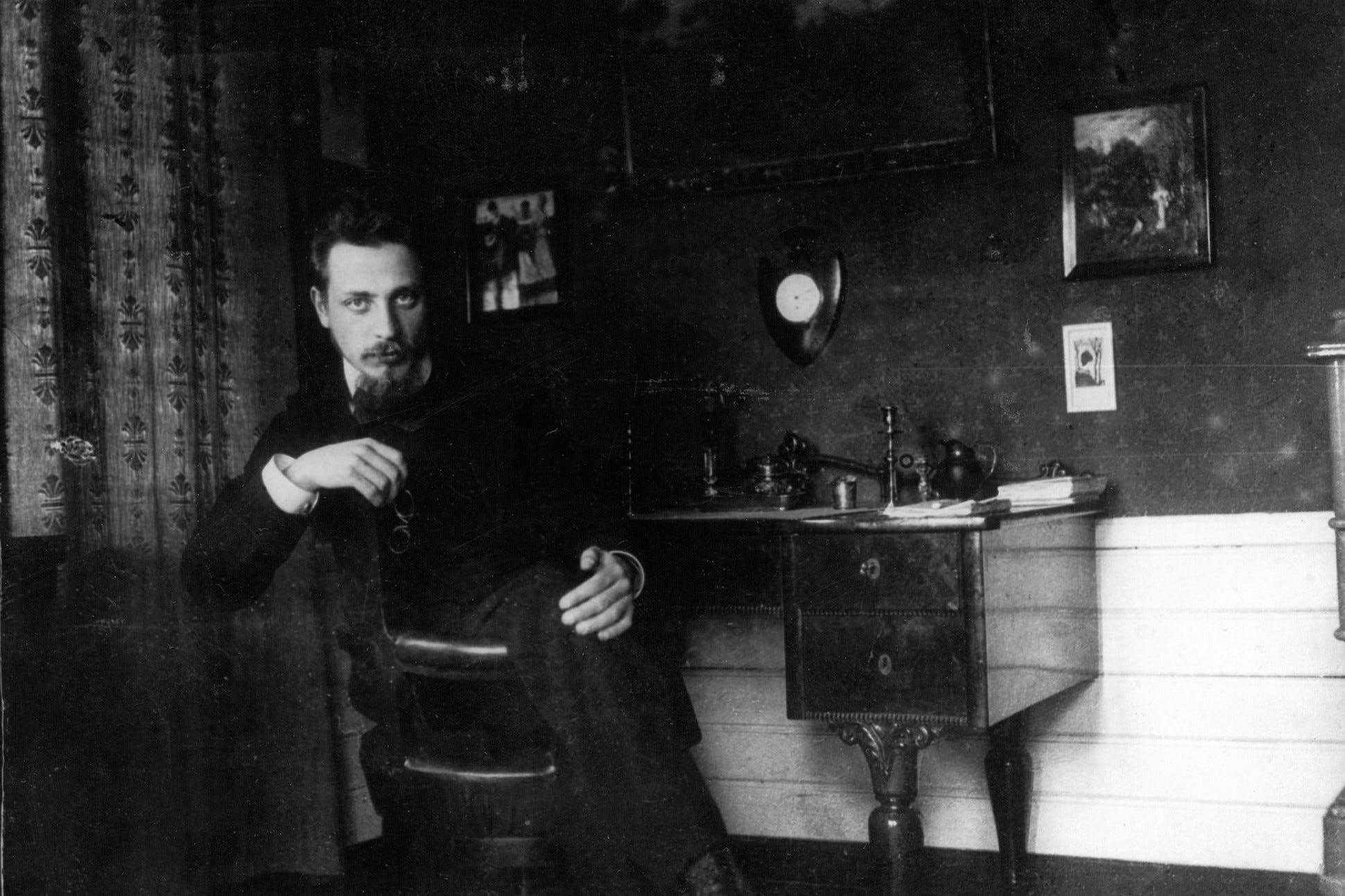
On Sunday, October 8, I’m teaching a two-hour class on Rilke for the Hudson Valley Writers Center. It will be a primer on how to approach the work, and what follows are some of the poems we will read together. For everyone else seeing this, I hope you enjoy following along.
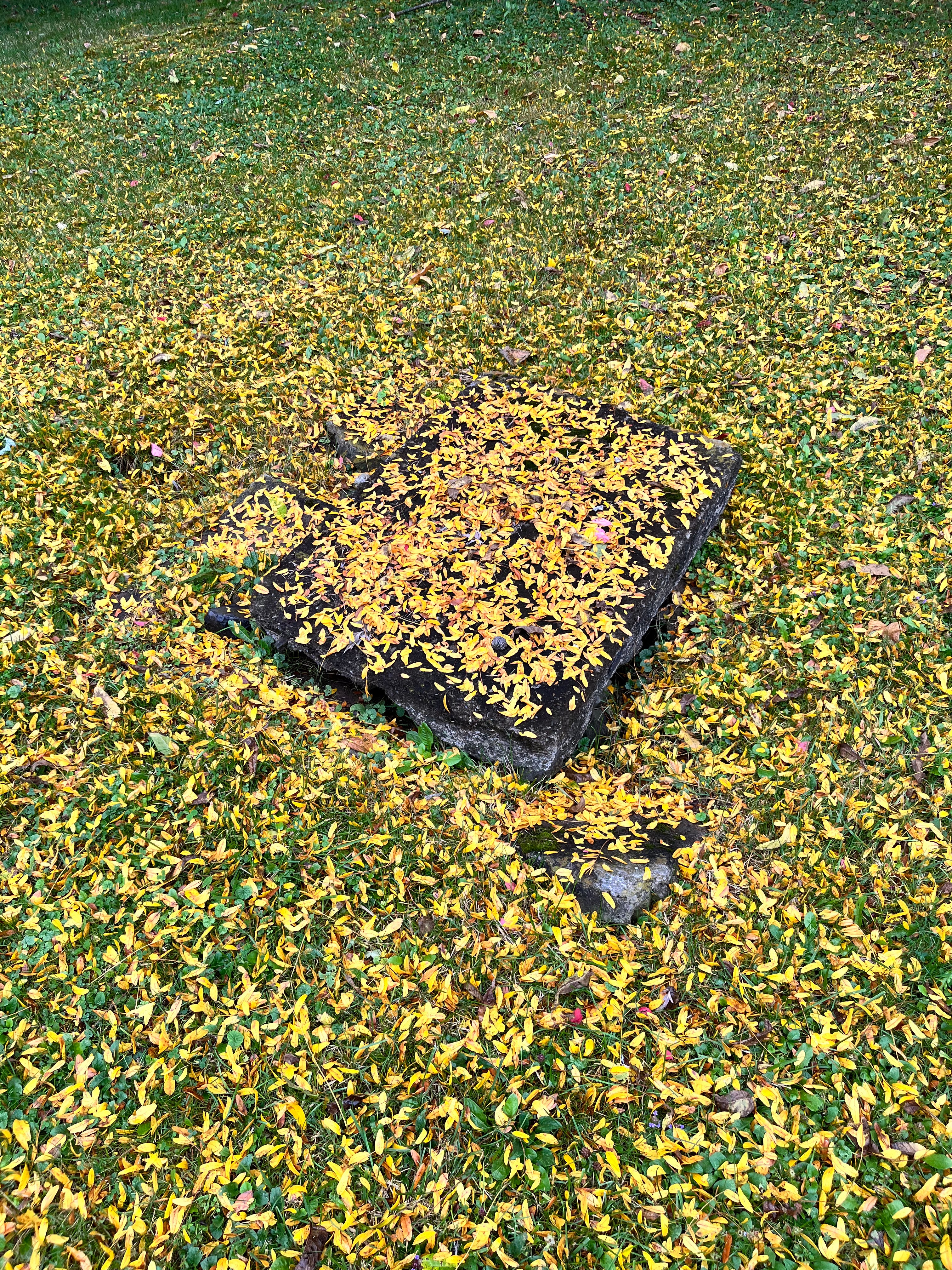
Day in Autumn
BY RAINER MARIA RILKE
TRANSLATED BY MARY KINZIE

After the summer's yield, Lord, it is time
to let your shadow lengthen on the sundials
and in the pastures let the rough winds fly.

As for the final fruits, coax them to roundness.
Direct on them two days of warmer light
to hale them golden toward their term, and harry
the last few drops of sweetness through the wine.

Whoever's homeless now, will build no shelter;
who lives alone will live indefinitely so,
waking up to read a little, draft long letters,
and, along the city's avenues,
fitfully wander, when the wild leaves loosen.
I thought we would start with this very fine translation by Mary Kinzie. You can read her translator’s note about the poem by following this link.
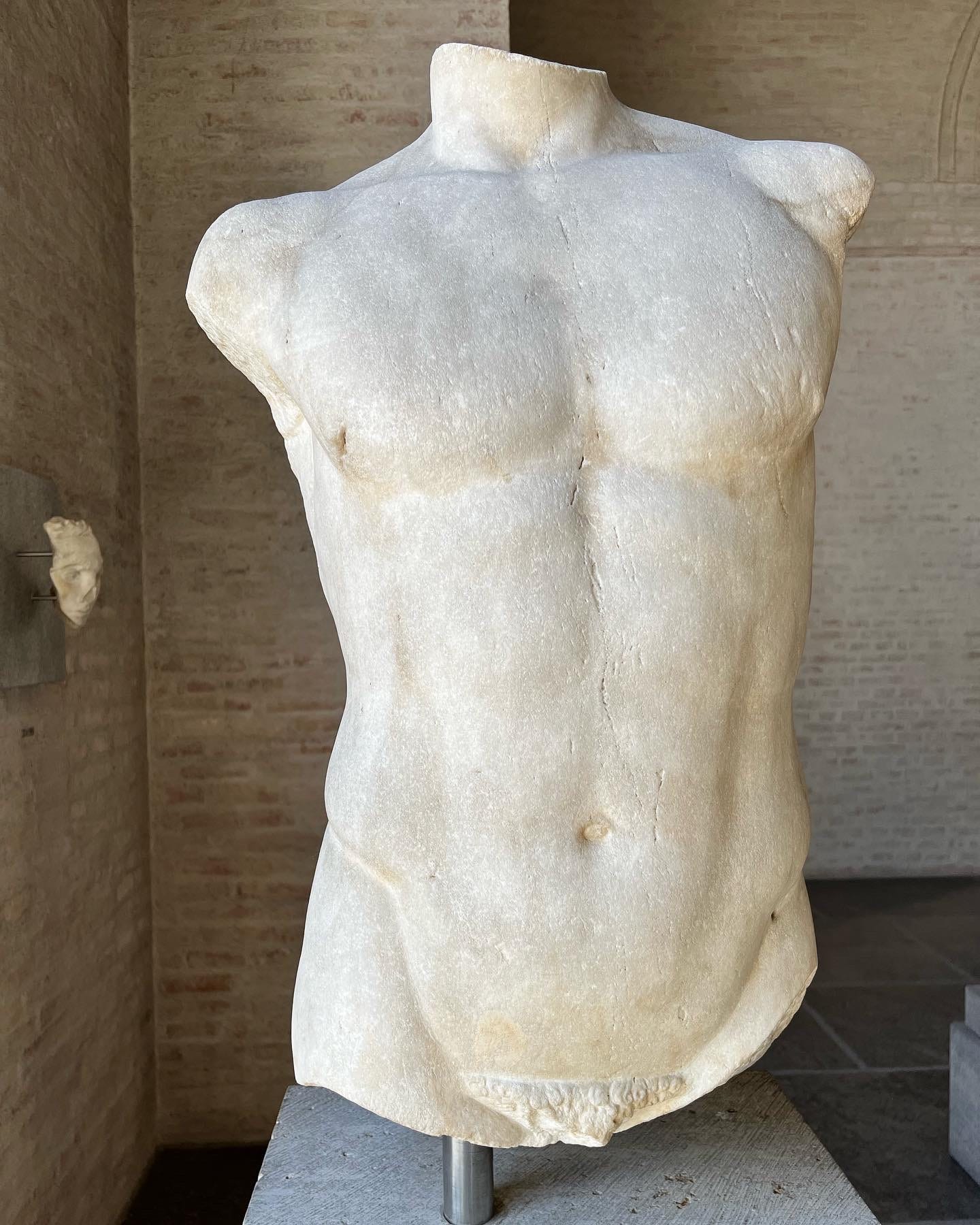
The Archaic Torso of Apollo
translated by Stephen Mitchell
We cannot know his legendary head
with eyes like ripening fruit. And yet his torso
is still suffused with brilliance from inside,
like a lamp, in which his gaze, now turned to low,

gleams in all its power. Otherwise
the curved breast could not dazzle you so, nor could
a smile run through the placid hips and thighs
to that dark center where procreation flared.

Otherwise this stone would seem defaced
beneath the translucent cascade of the shoulders
and would not glisten like a wild beast's fur:

would not, from all the borders of itself,
burst like a star: for here there is no place
that does not see you. You must change your life.


Orpheus, Eurydice, Hermes
translated by Franz Wright

This was the eerie mine of souls.
Like silent silver-ore
they veined its darkness. Between roots
the blood that flows off into humans welled up,
looking dense as porphyry in the dark.
Otherwise, there was no red.

There were cliffs
and unreal forests. Bridges spanning emptiness
and that huge gray blind pool
hanging above its distant floor
like a stormy sky over a landscape.
And between still gentle fields
a pale strip of road unwound.

They came along this road.

In front the slender man in the blue cloak,
mute, impatient, looking straight ahead.
Without chewing, his footsteps ate the road
in big bites; and both his hands hung
heavy and clenched by the pour of his garment
and forgot all about the light lyre,
become like a part of his left hand,
rose tendrils strung in the limbs of an olive.
His mind like two minds.
While his gaze ran ahead, like a dog,
turned, and always came back from the distance
to wait at the next bend–
his hearing stayed close, like a scent.
At times it seemed to reach all the way back
to the movements of the two others
who ought to be following the whole way up.
And sometimes it seemed there was nothing behind him
but the echo of his own steps, the small wind
made by his cloak. And yet
he told himself: they were coming, once;
said it out loud, heard it die away . . .
They were coming. Only they were two
who moved with terrible stillness. Had he been allowed
to turn around just once (wouldn't that look back
mean the disintegration of this whole work,
still to be accomplished) of course he would have seen them,
two dim figures walking silently behind:

the god of journeys and secret tidings,
shining eyes inside the traveler's hood,
the slender wand held out in front of him,
and wings beating in his ankles;
and his left hand held out to: her.

This woman who was loved so much, that from one lyre
more mourning came than from women in mourning;
that a whole world was made from mourning, where
everything was present once again: forest and valley
and road and village, field, river and animal;
and that around this mourning-world, just as
around the other earth, a sun
and a silent star-filled sky wheeled,
a mourning-sky with displaced constellations–:
this woman who was loved so much . . .

But she walked alone, holding the god's hand,
her footsteps hindered by her long graveclothes,
faltering, gentle, and without impatience.
She was inside herself, like a great hope,
and never thought of the man who walked ahead
or the road that climbed back toward life.
She was inside herself. And her being dead
filled her like tremendous depth.
As a fruit is filled with its sweetness and darkness
she was filled with her big death, still so new
that it hadn't been fathomed.

She found herself in a resurrected
virginity; her sex closed
like a young flower at nightfall.
And her hands were so weaned from marriage
that she suffered from the light
god's endlessly still guiding touch
as from too great an intimacy.

She was no longer the blond woman
who sometimes echoed in the poet's songs,
no longer the fragrance, the island of their wide bed,
and no longer the man's to possess.

She was already loosened like long hair
and surrendered like the rain
and issued like massive provisions.
She was already root.

And when all at once the god stopped
her, and with pain in his voice
spoke the words: he has turned around–,
she couldn't grasp this and quietly said: who?

But far off, in front of the bright door
stood someone whose face
had grown unrecognizable. He just stood and watched,
how on this strip of road through the field
the god of secret tidings, with a heartbroken expression,
silently turned to follow the form
already starting back along the same road,
footsteps hindered by long graveclothes,
faltering, gentle, and without impatience.
The First Elegy
translated by Edward Snow

Who, if I cried out, would hear me among the Angels’
Orders? and even if one of them pressed me
suddenly to his heart: I’d be consumed
in his more potent being. For beauty is nothing
but the beginning of terror, which we can still barely endure,
and while we stand in wonder it coolly disdains
to destroy us. Every Angel is terrifying.
And so I grip myself and choke down that call note
of dark sobbing. Ah, whom can we turn to
in our need? Not Angels, not humans,
and the sly animals see at once
how little at home we are
in the interpreted world. That leaves us
some tree on a slope, to which our eyes returned
day after day; leaves us yesterday’s street
and the coddled loyalty of an old habit
that liked it here, lingered, and never left.
O and the night, the night, when the wind full of worldspace
gnaws at our faces—, for whom won’t the night be there,
desired, softly disappointing, setting hard tasks
for the single heart. It is easier on lovers?
Ah, they only use each other to mask their fates.
You still don’t see? Fling the emptiness in your arms
out into the spaces we breathe; perhaps the birds
will feel the increase of air with more passionate flight.

Yes, the Springs needed you. Many a star was waiting
for your eyes only. A wave swelled toward you
out of the past, or as you walked by the open window
a violin inside surrendered itself
to pure passion. All that was your charge.
But were you strong enough? Weren’t you always distracted
by expectation, as though each such moment
presaged a beloved’s coming? (But where would you keep her,
with all those big strange thoughts in you
going and coming and sometimes staying all night?)
No, in the grip of longing sing women who loved;
their prodigious feeling still lacks an undying fame.
The abandoned ones you almost envy, since you found them
so much deeper in love than those whom love allayed.
Begin ever anew their impossible praise.
Remember: the hero lives on, even his downfall
was only a pretext for attained existence: his ultimate birth.
But nature, exhausted, takes women in love
back into herself, as though she lacked strength
to create them a second time. Have you praised Gaspara Stampa
intently enough that any girl left by her lover
will be moved by this heightened instance
of a woman’s heart to cry out: Let me be as she was!
Isn’t it time these most ancient sorrows
at last bore fruit? Time we tenderly detached ourselves
from the loved one, and trembling, stood free:
the way the arrow, suddenly all vector, survives the string
to be more than itself. For abiding is nowhere.

Voices, voices. Listen, my heart, the way
only saints have listened till now, as that vast call
lifted them from the ground; while they kept on kneeling
and noticed nothing, those impossible ones:
listeners fully absorbed. Not that you could bear
God’s voice—not at all. But listen to the wind’s breathing,
the unbroken news that takes shape out of silence.
It’s rustling toward you now from all the youthful dead.
When you entered a church in Rome or Naples,
didn’t their fate speak quietly to you?
Or an inscription echoed deep within you,
as, not long ago, that tablet in Santa Maria Formosa.
Their charge to me?—that I gently dispel
the air of injustice that sometimes
hinders a little their spirits’ pure movement.

Granted, it’s strange to dwell on earth no more,
to cease observing customs barely learned,
not to give roses and other things of such promise
a meaning in some human future:
to stop being what one was in endlessly anxious hands,
and ignore even one’s own name like a broken toy.
Strange, not to go on wishing one’s wishes. Strange,
to see all that was once so interconnected
drifting in space. And death exacts a labor,
a long finishing of things half-done, before
one has that feeling of eternity.—But the living
all make the same mistake: they distinguish too sharply.
Angels (it’s said) often don’t know whether they’re moving among
the living or the dead. The eternal current
sweeps all the ages with it through both kingdoms
forever and drowns their voices in both.

In the end, those torn from us early no longer need us:
slowly one becomes unaccustomed to earthly things,
in the gentle way one leaves a mother’s breast. But we, who need
such great mysteries, for whom so often blessed progress
springs from grief—: could we exist without them?
Is it a tale told in vain, that myth of lament for Linos,
in which a daring first music pierced the shell of numbness:
stunned Space, which an almost divine youth
had suddenly left forever; then, in that void, vibrations—
which for us now are rapture and solace and help.
Die erste Elegie


Wer, wenn ich schriee, hörte mich denn aus der Engel
Ordnungen? und gesetzt selbst, es nähme
einer mich plötzlich ans Herz: ich verginge von seinem
stärkeren Dasein. Denn das Schöne ist nichts
als des Schrecklichen Anfang, den wir noch grade ertragen,
und wir bewundern es so, weil es gelassen verschmäht,
uns zu zerstören. Ein jeder Engel ist schrecklich.
Und so verhalt ich mich denn und verschlucke den Lockruf
dunkelen Schluchzens. Ach, wen vermögen
wir denn zu brauchen? Engel nicht, Menschen nicht,
und die findigen Tiere merken es schon,
daß wir nicht sehr verläßlich zu Haus sind
in der gedeuteten Welt. Es bleibt uns vielleicht
irgend ein Baum an dem Abhang, daß wir ihn täglich
wiedersähen; es bleibt uns die Straße von gestern
und das verzogene Treusein einer Gewohnheit,
der es bei uns gefiel, und so blieb sie und ging nicht.
O und die Nacht, die Nacht, wenn der Wind voller Weltraum
uns am Angesicht zehrt —, wem bliebe sie nicht, die ersehnte,
sanft enttäuschende, welche dem einzelnen Herzen
mühsam bevorsteht. Ist sie den Liebenden leichter?
Ach, sie verdecken sich nur mit einander ihr Los.
Weißt du’s noch nicht? Wirf aus den Armen die Leere
zu den Räumen hinzu, die wir atmen; vielleicht daß die Vögel
die erweiterte Luft fühlen mit innigerm Flug.


Ja, die Frühlinge brauchten dich wohl. Es muteten manche
Sterne dir zu, daß du sie spürtest. Es hob
sich eine Woge heran im Vergangenen, oder
da du vorüberkamst am geöffneten Fenster,
gab eine Geige sich hin. Das alles war Auftrag.
Aber bewältigtest du’s? Warst du nicht immer
noch von Erwartung zerstreut, als kündigte alles
eine Geliebte dir an? (Wo willst du sie bergen,
da doch die großen fremden Gedanken bei dir
aus und ein gehn und öfters bleiben bei Nacht.)
Sehnt es dich aber, so singe die Liebenden; lange
noch nicht unsterblich genug ist ihr berühmtes Gefühl.
Jene, du neidest sie fast, Verlassenen, die du
so viel liebender fandst als die Gestillten. Beginn
immer von neuem die nie zu erreichende Preisung;
denk: es erhält sich der Held, selbst der Untergang war ihm
nur ein Vorwand, zu sein: seine letzte Geburt.
Aber die Liebenden nimmt die erschöpfte Natur
in sich zurück, als wären nicht zweimal die Kräfte,
dieses zu leisten. Hast du der Gaspara Stampa
denn genügend gedacht, daß irgend ein Mädchen,
dem der Geliebte entging, am gesteigerten Beispiel
dieser Liebenden fühlt: daß ich würde wie sie?
Sollen nicht endlich uns diese ältesten Schmerzen
fruchtbarer werden? Ist es nicht Zeit, daß wir liebend
uns vom Geliebten befrein und es bebend bestehn:
wie der Pfeil die Sehne besteht, um gesammelt im Absprung
mehr zu sein als er selbst. Denn Bleiben ist nirgends.


Stimmen, Stimmen. Höre, mein Herz, wie sonst nur
Heilige hörten: daß die der riesige Ruf
aufhob vom Boden; sie aber knieten,
Unmögliche, weiter und achtetens nicht:
So waren sie hörend. Nicht, daß du Gottes ertrügest
die Stimme, bei weitem. Aber das Wehende höre,
die ununterbrochene Nachricht, die aus Stille sich bildet.
Es rauscht jetzt von jenen jungen Toten zu dir.
Wo immer du eintratest, redete nicht in Kirchen
zu Rom und Neapel ruhig ihr Schicksal dich an?
Oder es trug eine Inschrift sich erhaben dir auf,
wie neulich die Tafel in Santa Maria Formosa.
Was sie mir wollen? leise soll ich des Unrechts
Anschein abtun, der ihrer Geister
reine Bewegung manchmal ein wenig behindert.


Freilich ist es seltsam, die Erde nicht mehr zu bewohnen,
kaum erlernte Gebräuche nicht mehr zu üben,
Rosen, und andern eigens versprechenden Dingen
nicht die Bedeutung menschlicher Zukunft zu geben;
das, was man war in unendlich ängstlichen Händen,
nicht mehr zu sein, und selbst den eigenen Namen
wegzulassen wie ein zerbrochenes Spielzeug.
Seltsam, die Wünsche nicht weiterzuwünschen. Seltsam,
alles, was sich bezog, so lose im Raume
flattern zu sehen. Und das Totsein ist mühsam
und voller Nachholn, daß man allmählich ein wenig
Ewigkeit spürt. — Aber Lebendige machen
alle den Fehler, daß sie zu stark unterscheiden.
Engel (sagt man) wüßten oft nicht, ob sie unter
Lebenden gehn oder Toten. Die ewige Strömung
reißt durch beide Bereiche alle Alter
immer mit sich und übertönt sie in beiden.


Schließlich brauchen sie uns nicht mehr, die Früheentrückten,
man entwöhnt sich des Irdischen sanft, wie man den Brüsten
milde der Mutter entwächst. Aber wir, die so große
Geheimnisse brauchen, denen aus Trauer so oft
seliger Fortschritt entspringt —: könnten wir sein ohne sie?
Ist die Sage umsonst, daß einst in der Klage um Linos
wagende erste Musik dürre Erstarrung durchdrang;
daß erst im erschrockenen Raum, dem ein beinah göttlicher Jüngling
plötzlich für immer enttrat, die Leere in jene
Schwingung geriet, die uns jetzt hinreißt und tröstet und hilft.


The Raising of Lazarus
translated by Franz Wright

Evidently, this was needed. Because people need
to be screamed at with proof.
But he knew his friends. Before they were
he knew them. And they knew
that he would never leave them
there, desolate. So he let his exhausted eyes close
at first glimpse of the village fringed with tall fig
trees —
immediately he found himself in their midst:
here was Martha, sister of the dead
boy. He knew
she would not stray,
as he knew which would;
he knew that he would always find her
at his right hand,
and beside her
her sister Mary, the one
a whole world of whores
still stood in a vast circle pointing at. Yes,
all were gathered around him. And once again
he began to explain
to bewildered upturned faces
where it was he had to go, and why.
He called them “my friends.” The Logos, God’s
creating word, — the same voice that said
Let there be light.
Yet
when he opened his eyes,
he found himself standing apart.
Even the two
slowly backing away, as though
from concern for their good name.
Then he began to hear voices;
whispering
quite distinctly,
or thinking:
Lord,
if you had been here
our friend might not have died.
(At that, he slowly reached out
as though to touch a face,
and soundlessly started to cry.)
He asked them the way to the grave.
And he followed behind them,
preparing
to do what is not done
to that green silent place
where life and death are one.
By then other Brueghelian grotesques
had gathered, toothlessly sneering
across at each other and stalled
at some porpoise or pig stage
of ontogenetical horrorshow, keeping
their own furtive shadowy distances
and struggling to keep up
like packs of limping dogs;
merely to walk down this road
in broad daylight
had begun to feel illegal,
unreal, rehearsal,
test — but for what!
And the filth of desecration
sifting down over him, as a feverish outrage
rose up, contempt
at the glib ease
with which words like “living”
and “being dead”
rolled off their tongues;
and loathing flooded his body
when he hoarsely cried,
“Move the stone!”
“By now the body must stink,”
some helpfully suggested. But it was true
that the body had lain in its grave four days.
He heard the voice as if from far away,
beginning to fill with that gesture
which rose through him: no hand that heavy
had ever reached this height, shining
an instant in air. Then
all at once clenching
and cramped — the fingers
shrunk crookedly
into themselves,
and irreparably fixed there,
like a hand with scars of ghastly
slashing lacerations
and the usual deep sawing
across the wrist’s fret,
through all major nerves,
the frail hair-like nerves —
so his hand
at the thought
all the dead might return
from that tomb
where the enormous cocoon
of the corpse was beginning to stir.
Yet nobody stood there —
only the one young man,
pale as though bled,
stooping at the entrance
and squinting at the light,
picking at his face, loose
strips of rotting shroud.
All that he could think of
was a dark place to lie down,
and hide that wasted body.
And tears rolled up his cheek
and back into his eyes,
and then his eyes began
rolling back into his head ...
Peter looked across at Jesus
with an expression that seemed to say
You did it, or What have you done?
And everyone saw
how their vague and inaccurate
life made room for his once more.