

Living With Ghosts
The second installment about life in a haunted house.

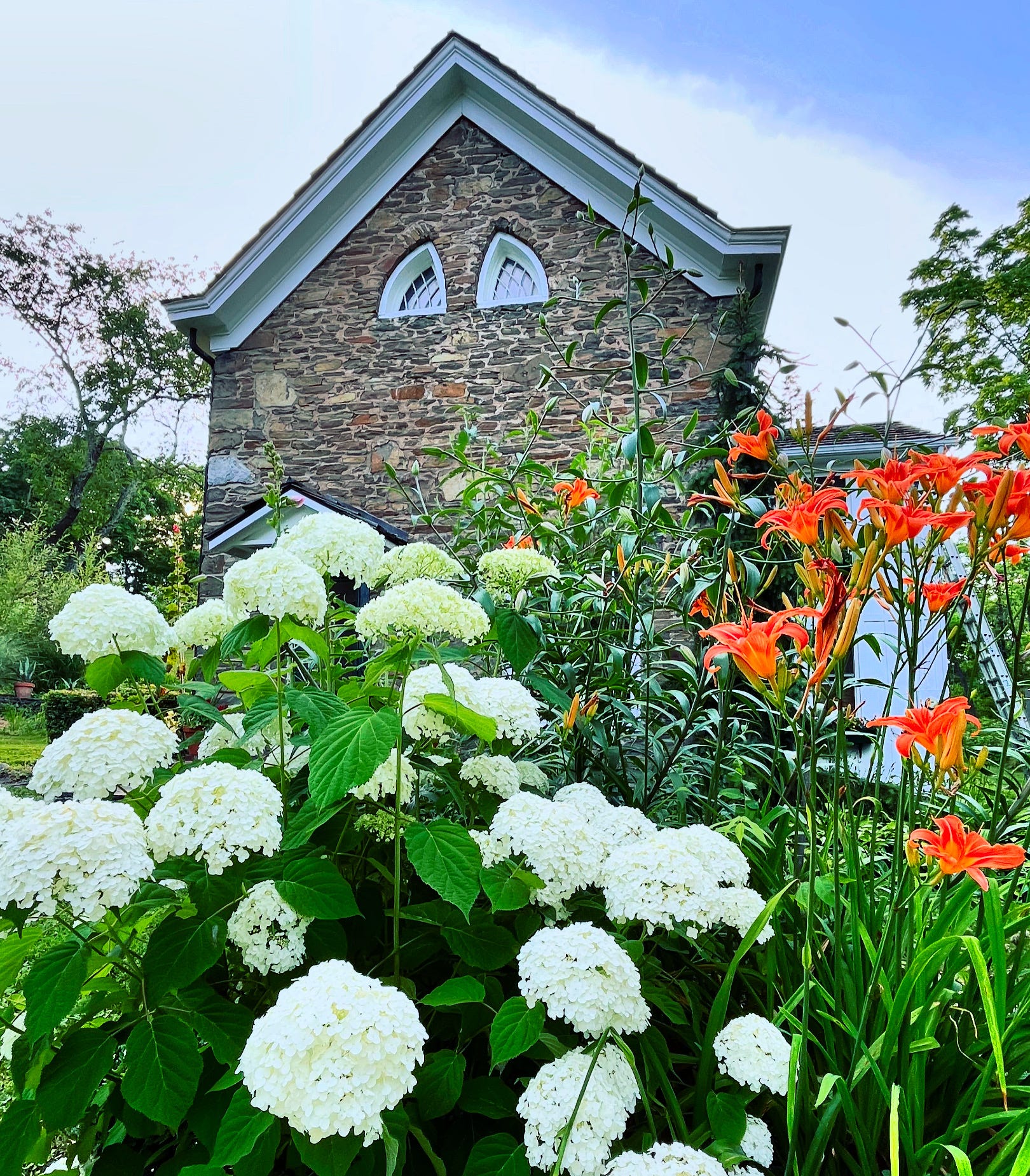
The house at the top of Hamburg Road between Catskill and Athens, New York is set back from the road, just below a small ridge that runs parallel to the Hudson River. One of the few historical references to the house mentions a well at the front of the property near the road where travelers would stop to water their horses or refresh themselves with a cool drink. Now a large concrete slab covers the stone-lined shaft that was once the source of water for the house. In the spring, particularly at the top of the ridge behind the house, I often find objects that have long been buried, but are heaved up by the frost: a horseshoe, old medicine bottles, a beautiful iron hook with a decorative twist made by a skilled blacksmith 200 years ago or more, barbed wire, bottlecaps, a large iron spike. There was likely a sort of dump back there, and each spring I look forward to seeing what turns up next in an act that’s a bit like mudlarking, but without the mud.
One common trope in stories of haunted houses is that of the ignorant newcomer—think of the jocular stranger arriving at Wuthering Heights in a storm only to have a ghostly arm smash through his bedroom window in the night, or the poor governess arriving to look after the two creepy children in The Turn of the Screw. I suppose I was the ignorant newcomer at my own house, eager to learn about the past residents of the house, but also not apt to believe in the supernatural.
I had lived in the house for about a year when a peculiar incident took place. The local historical society sponsors an annual house tour of historic homes to raise money for their programs. When you buy a ticket, you get a map of the houses that are open, and you drive yourself around to go have a snoop. I was in nearby Athens have a look around one of the houses on the tour, when the host asked me where I lived. I told her I had bought the old stone house above Hamburg Road closer to Catskill—perhaps she knew it? She said she did, and mentioned that she was happy to see it was being fixed up. As we chatted, I noticed an older couple listening to our conversation, though furtively. I later saw them together speaking with low voices in a way that seemed serious. After making my way through the house, I was heading for the door, when the couple approached me, and the woman spoke.
“My husband was reluctant to speak to you, but I’m not. We overheard you talking about your house—the old stone house on 385. My husband grew up next door and remembers that house well. It’s been years since he’s seen it. Would you mind terribly if we came by? If it’s inconvenient, we understand. It’s just that he’s talked about that house for years, and, well, I’m curious about it too.”
“I’m heading back home now, and you’re more than welcome to come have a look,” I told them, and warned them that much of the house was involved in heavy renovations, so it was a bit of a construction zone. If they didn’t mind the mess, they can come by any time in the afternoon. We set a time, and about an hour later, they pulled into the driveway.
I toured them through the house in which we we laying some new floors. I showed them a box of bits and pieces I had come across during renovations—little pieces of the past we found behind walls or under floors: bits of blue willow china from the 19th century, scraps of block-printed Victorian wallpaper, wads of cow hair that had been stuffed into the cracks as insulation. They remarked on the windows with their Victorian stained glass, and on the new pine floors that were replacing linoleum that we walked on wearing only socks until we got them sanded and finished. They began their departure, but once again the husband began to seem nervous, and was hanging back as if he wanted to have a private word.
“There is something I think I need to tell you. I have thought about it my whole life, and returning to this house and meeting you has made it all come back so vividly.” I started to get concerned.
“When I was a boy—about 12 years old—a friend and I had some fireworks and we were setting them off. One of the bottle rockets we had went up, and we could see it landing over here, somewhere near this old house. No one had lived in the house for years, and it was dark and locked up—we knew that. We ran over to the house and searched through the long grass for the rocket—we didn’t want anthing to catch on fire. While I was looking around in the yard, I looked up toward the house, and there at the second story window, there was an old woman. She had a kerchief on her head, and she has been sitting in a chair—a rocking chair I think. She was standing in the window and looking up the hill, as if she was waiting for someone, expecting someone to arrive. I knew no one lived in the house at that time, so I was surprised to see her, and after a while, she was gone.”
“My friend and I couldn’t find any sign of the rocket, so we walked back home. As we walked, I started to ask my friend if he had seen anyone in the house. “You mean that old lady? Yeah, I saw her. I thought you said nobody lived there.”
The man didn’t comment on the occurrence, nor did he name what he had seen. I think he wanted me to know that he had seen something extraordinary in this house that he couldn’t explain, and that had somehow changed his idea about what is real, and what cannot be rationally explained. I walked him back toward the front of the house and driveway where his wife was waiting.
“It occurs to me that you never told me where you lived now. I know you used to live in Catskill, but where is home now?”
“We live in Minnesota now,” the wife said. “It’s a small town. You’ve not heard of it.”
“I was born in Minnesota,” I said. “I grew up on the Mississippi, just across the river on the Wisconsin side. What’s the name of the town?”
“I doubt you’ve heard of it,” she repeated. “It’s called Winona.”
“That’s where I was born. Most of my family is from there. My mother and father both worked in Winona.” They looked at me as if I was telling a wild story. They left in a state of astonishment at the series of odd coincidences that had marked the day. That evening my mother called from Wisconsin for a chat. I told her about the house tour and the couple and the ghost who apparently looks out the window of my bedroom, waiting for someone to return from the past. She asked the name of the couple, and I told her. “Oh, I know who they are,” she said. She knew the house they had bought, where they lived. “Life is funny that way,” she said. “What way?” I asked?” “Oh you know,” she said. “Something isn’t really dead and gone if somebody remembers it.”
In my next installment about life in a haunted house, I will recommend two excellent books that help to put the idea of hauntedness into a historical context. Thanks for reading.
To installment III — may she be here soon (and book recommendations even sooner). A great read to end the day! Thanks!