

A Summer Update
Mary Ruefle at Poets House; MFA & Summer in Vermont; A trip to the Lucie Brock-Broido Archives

We just passed the solstice, summer heat has descended on the Northeast, and I have a minute for an update as these days begin to slow, and I catch just a glimpse of the great torpor of summer I experienced when I was young. Summer used to feel endless—one day just metabolizing into the next without boundaries or shape. I remember one childhood summer when I read on the roof of the house, crouched in the shade next to the chimney. I don’t really remember why I was on the roof—to avoid being seen? To try to prevent someone from giving me some chore or task to complete? I remember being lost in books up there, and reading the whole series of The Wizard of Oz. It feels impossible now to have that kind of reading experience, to be consumed by a book, to have nothing else pressing in to keep you from giving yourself over to the words and story. I am determined to have that once again, if even for a little while, and I’m going to try to achieve it this summer.
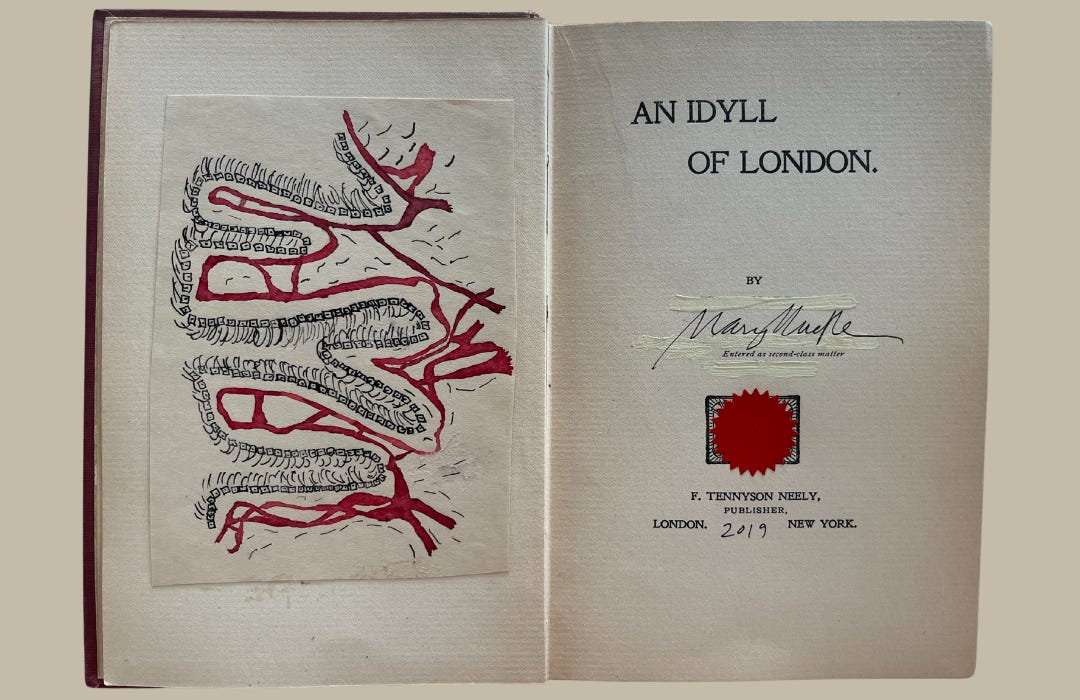
If you happen to be in New York City, I encourage you to go and see the exhibition of Mary Ruefle’s treated books and erasure texts on display at Poets House. The show originated at the Robert Frost Stone House Museum in Shaftsbury, and was co-curated by myself and Erin McKenny. The show has since traveled to St. Louis, and to the University of Arizona Poetry Center, and now it’s in New York where John Vincler has put it together. It’s a beautiful show with about sixty or seventy pieces, and it includes a book you can handle and page through and read. The show will be up through July. You can also ready a funny interview that a Poets House staff member conducted with Mary through the mail by following this link.
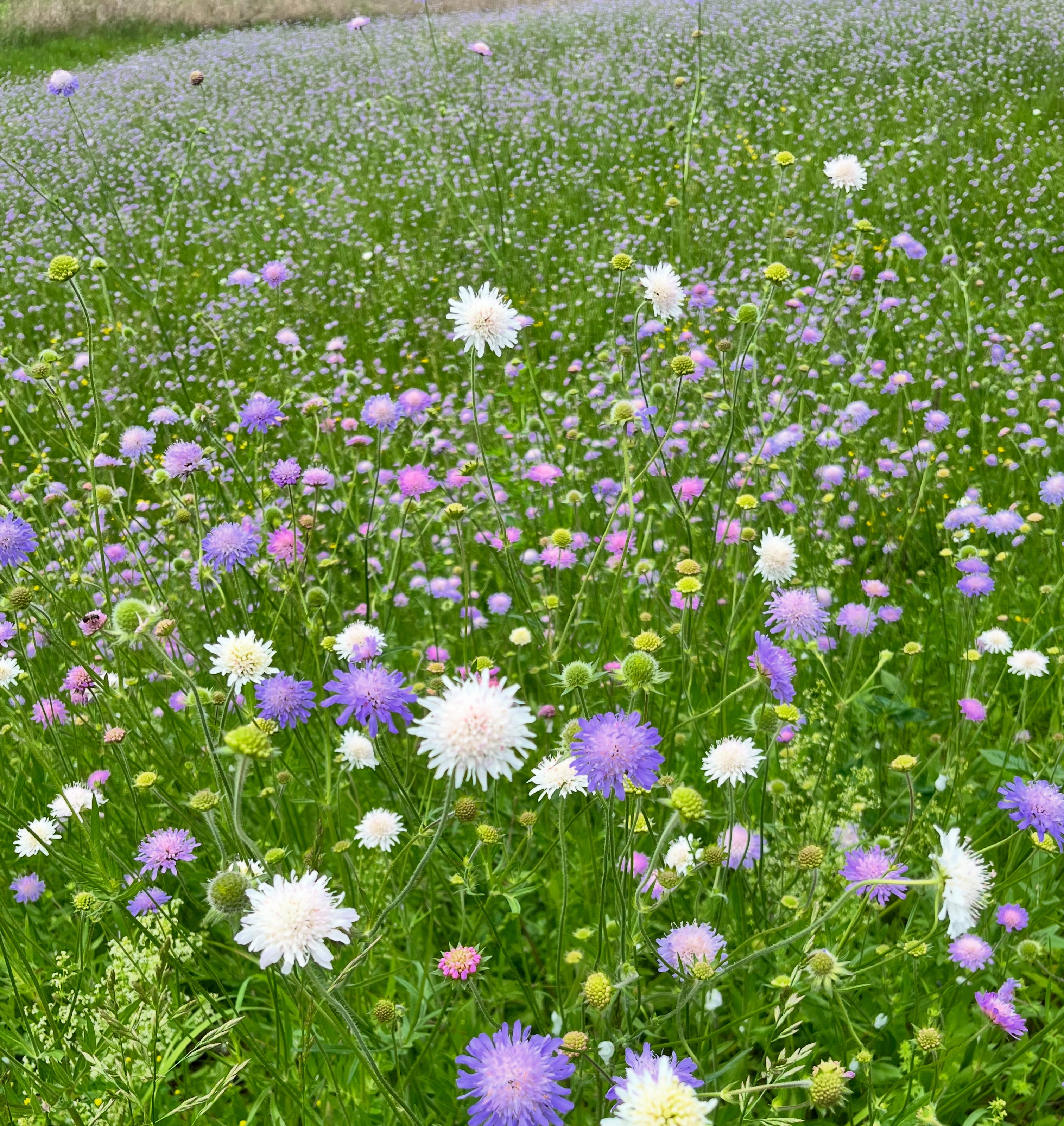
Earlier this June, the Bennington Writing Seminars held it’s 60th residency on campus. It was also the largest one of these events in the program’s history. Around 220 participants came to campus—students, staff, faculty, and visiting writers, as well as agents, editors and literary professionals. The first night in Tishman Auditorium was a sight to behold, with nearly every seat taken, and people sitting on the stairs in the isles. The mood for the entire ten days was buoyant and enthusiastic, and the program of events left me feeling inspired by the brilliance of the faculty and guests, and by the great goodwill of our students who were eagerly and generously engaged.
I think people were grateful to be together, and to be together in Vermont at a progressive college that has always been a home for art and literary culture. The campus felt like a refuge from a burning world increasingly ruled by boorish, violent, philistine tyrants. One can feel the culture and the values of Bennington in the place itself, and to spend ten days discussing language, writing and literature felt to me like the most important task we could undertake. For those ten days, we made the work we do as writers our priority, and we put that work at the center of our lives and our world. I was—and continue to be—incredibly proud of the work we did together, and I’m proud of the program it’s my great privilege to lead.
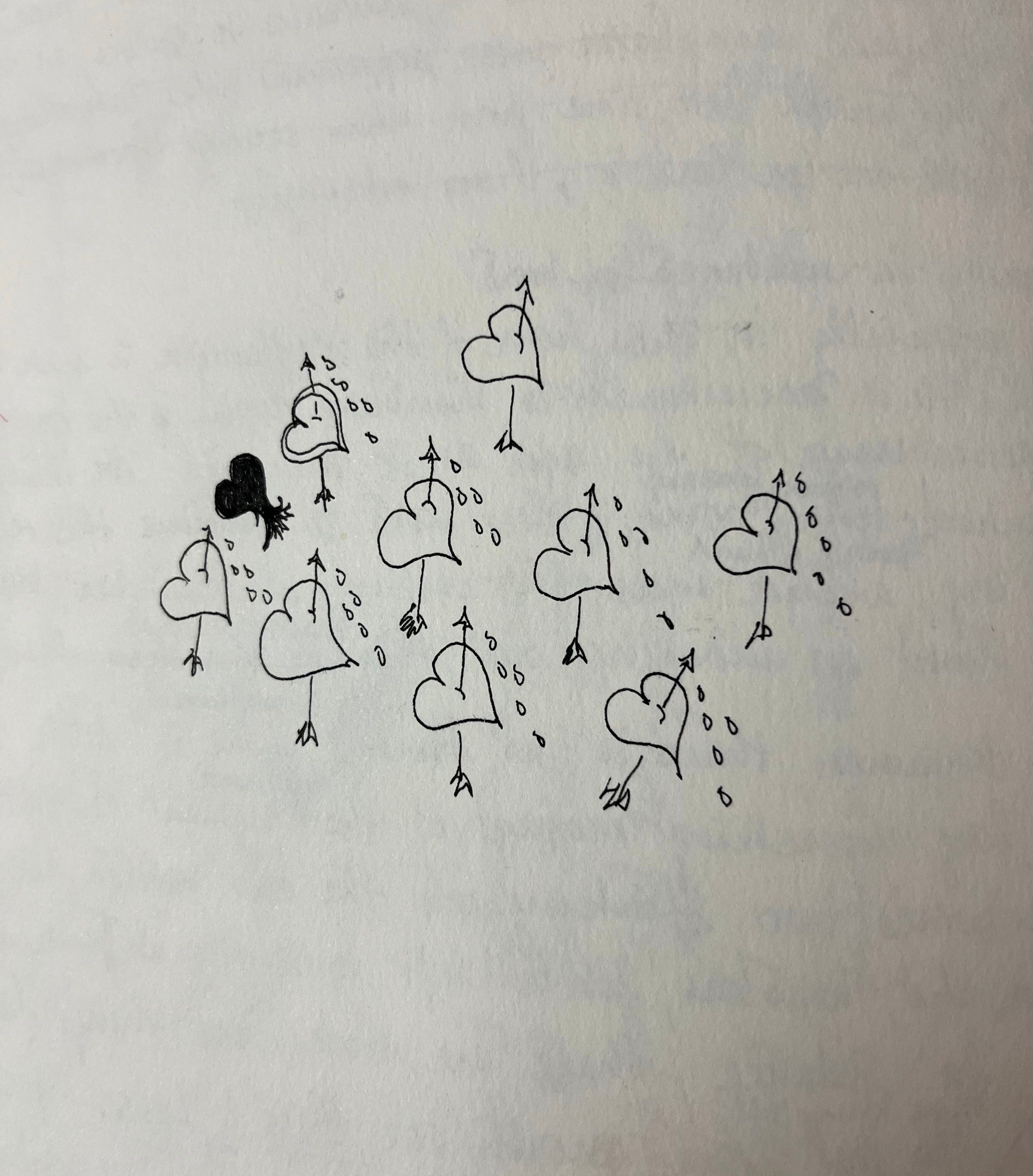
This spring I taught a lecture course at Columbia University on the poetry and prose of Rainer Maria Rilke. Once a week, I took the train from Hudson to New York City, and then wound through the bowels of Penn Station to the subway to Columbia University and Morningside Heights. For two hours each week, I held forth in one of the very same grubby classrooms where I was a student thirty-three years ago. Now there are big, improvised monitors and technology in the classrooms, but otherwise they are exactly the same—same big sash windows that stick, then give in and go up in a rumble, same stifling heat. It was in one of these rooms where I first me Lucie Brock-Broido who became my teacher and mentor, and then who became my friend.
Lucie died in March of 2018 from a brain tumor. She was 61 years old. Lucie was the most extraordinary teacher and a brilliant, funny, maddening person, and she changed my world in profound ways. I thought of her every week when I returned to Dodge Hall on the Columbia campus, and it was these memories that led me to make an appointment at the special collections library on campus to go and spend a day looking at Lucie’s archived papers.
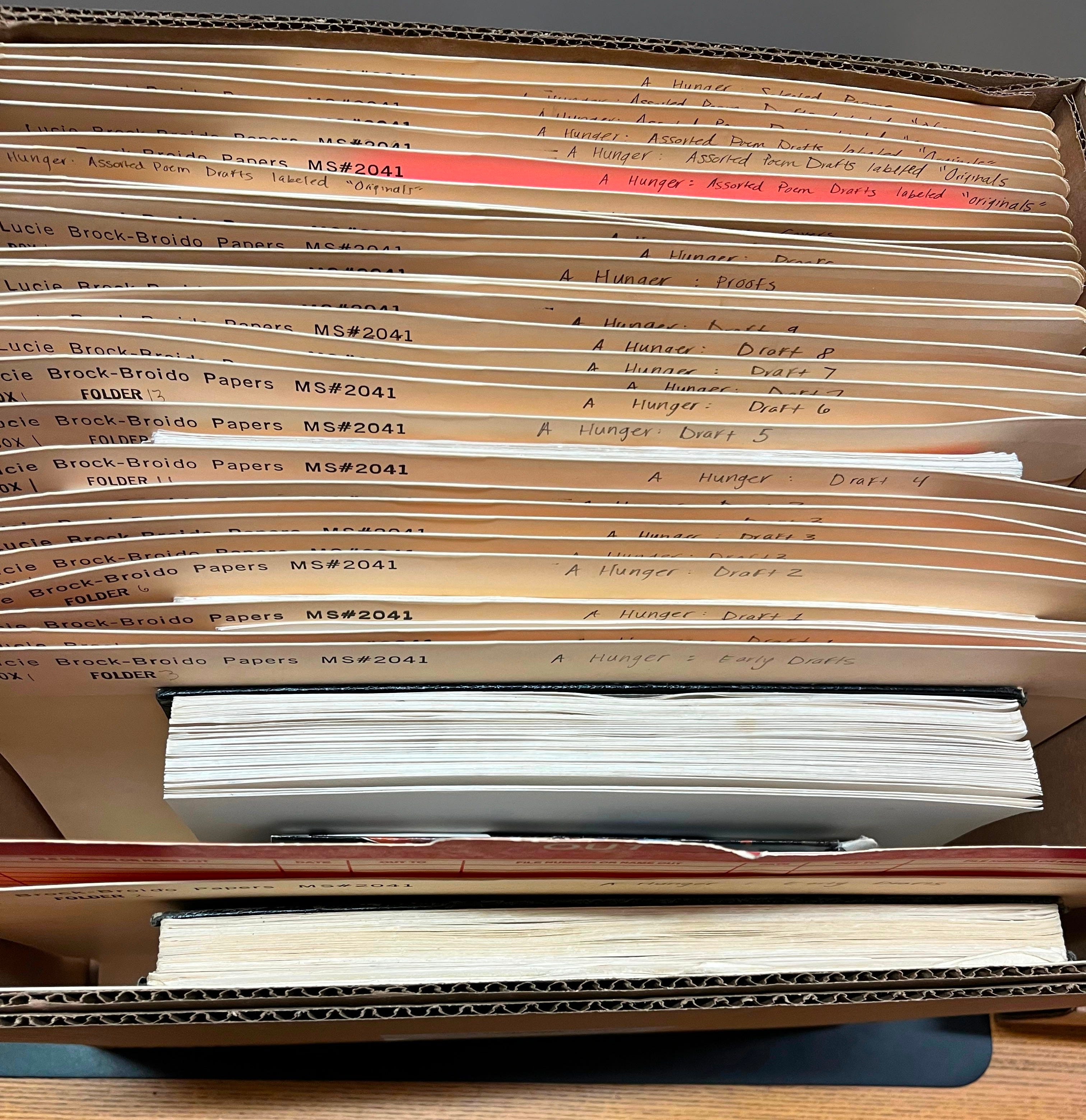
To look through the papers of someone one knew is to be both scholar and snoop. Lucie had not made any provision for her papers, and so it was left to her executor to decide their fate. Her notebooks, correspondence, drafts of poems, files of documents pertaining to her penchant for interior decorating and home renovations, a file of correspondence with her favorite cat breeder, etc. were all just boxed up and set aside, until the executor decided to donate them to Columbia University, where they will remain.
I requested the five boxes allowed, and after surrendering my ID and locking up my coat and bag in a locker, I took my phone and my laptop (both are permitted) and sat at the El-shaped, leather-topped table and began to read.
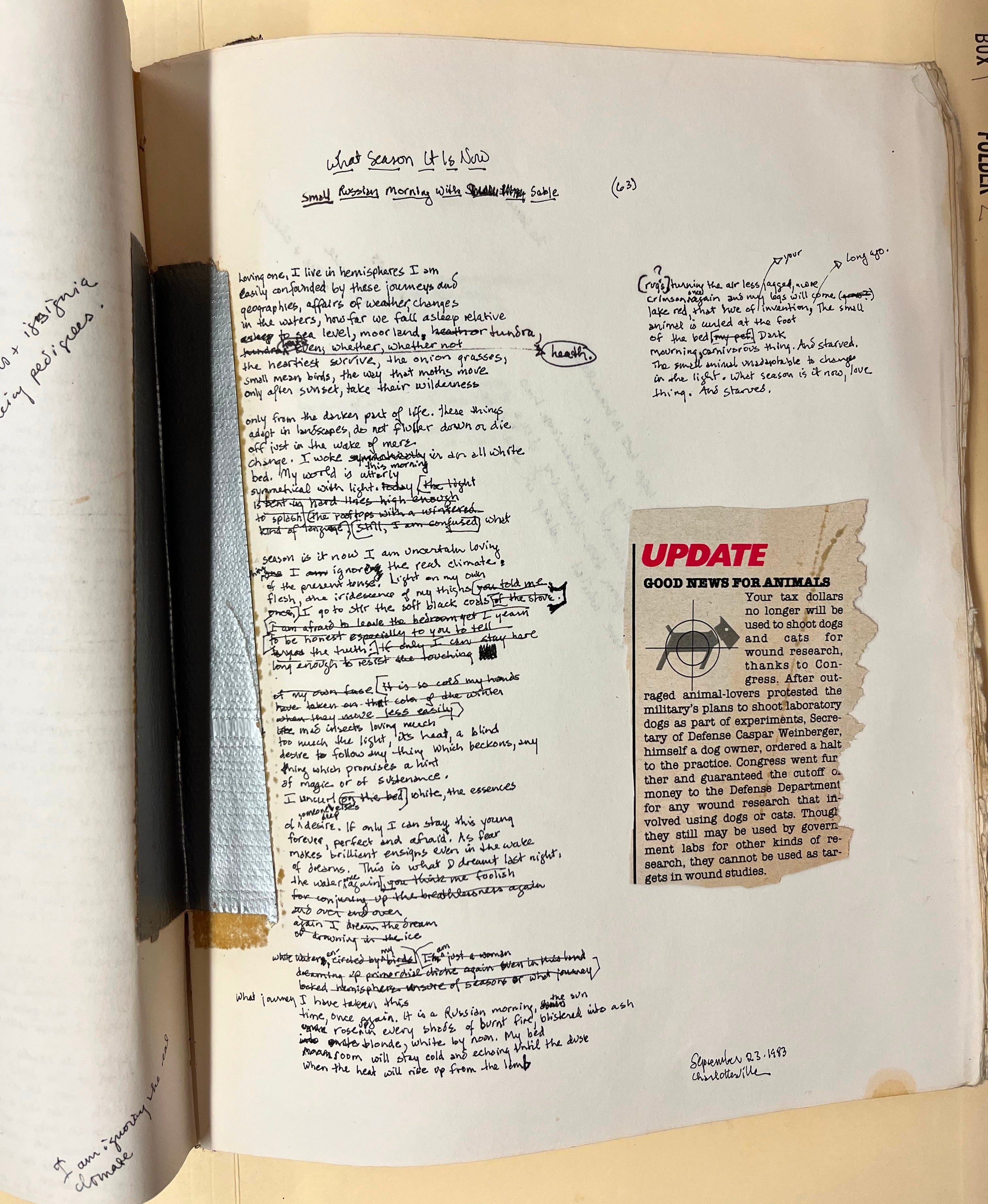
Lucie wrote in large blank and black-covered sketchpads. Her handwriting in her notebooks is minuscule, crabbed, ungenerous. As in the example above, she sometimes pasted in articles, quotes and scraps of things she has read that may be relevant to the poem she was working on. She rewrote, struck through and sometimes blacked out parts of the poem. The work she performed was simultaneously meticulous and hectic, organized according to a system, but chaotically rendered. Often she began poems on a single spread of a notebook with the poem written on the right side, and on the left she wrote notes, quotes, definitions.
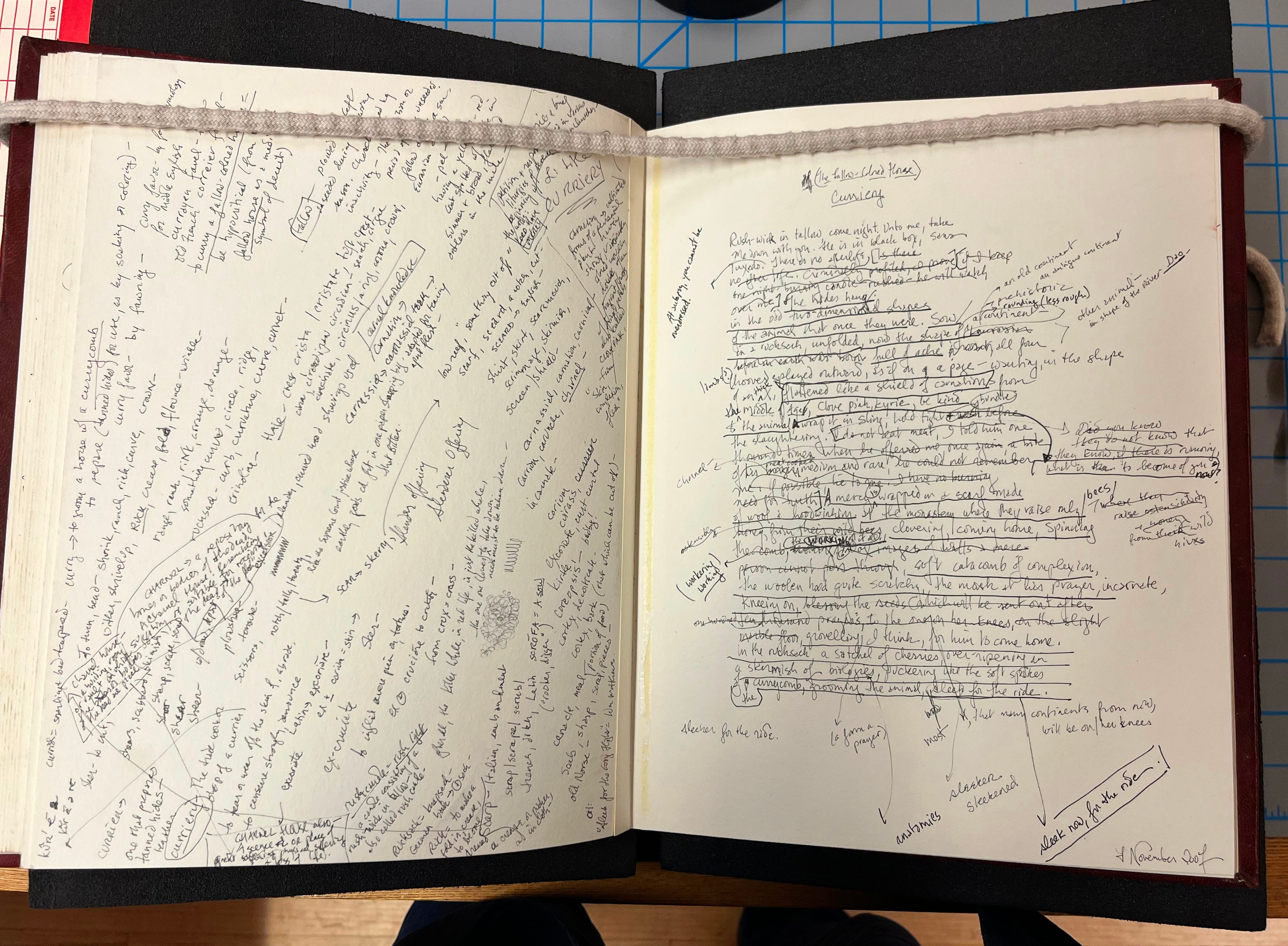
I spent a couple hours reading through these notebooks, trying to recognize the finished poems, which proved extremely difficult. Lucie’s poems were assembled from the many parts of poems over the course of many drafts. The poems she eventually published were so revised as to be nearly unrecognizable from their origins in these notebooks.
After the notebooks, I turned to the correspondence which was extensive…
’ll write more about my time spent in the archive in the next post, so stay tuned.
Having seen the Mary Ruefle exhibit at both the Robert Frost Stone Farm and Poets House, I will echo your exhortation for people to see it - the sheer wit and inventiveness to be found there is astonishing.
Also really appreciated the glimpse into the Brock-Broido papers. I'm serving as literary executor for my undergrad poetry mentor and have arranged for her papers to go to the university where she received her MFA (it is, coincidentally, also where I work) and it's a whole process.